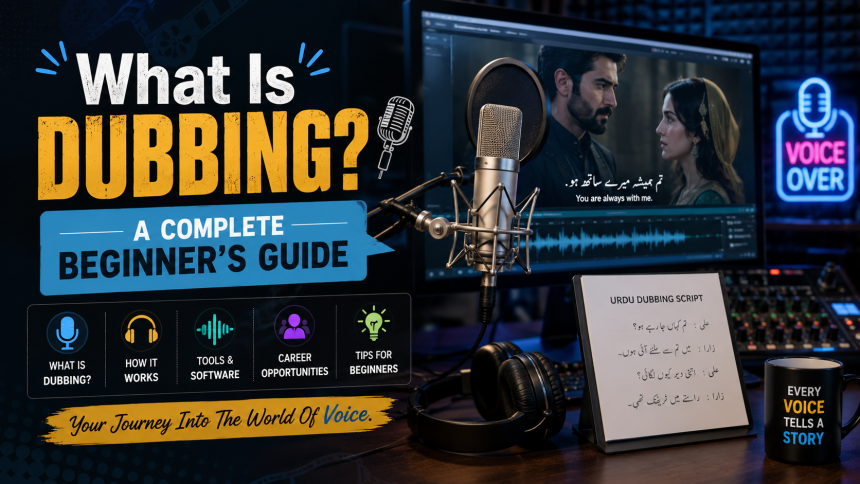
If you have ever watched a Turkish drama or a cartoon in Urdu and wondered how the characters suddenly speak your language, you have already met the art of dubbing. Dubbing is the process of replacing the original spoken dialogue of a film, drama, or video with a newly recorded voice track in another language. Done well, it lets you enjoy a story from anywhere in the world as if it were made for you.
- What Does “Dubbing” Actually Mean?
- How Does Dubbing Work? (The Short Version)
- Dubbing vs Subtitling
- Who Works on a Dub?
- Why Is Urdu Dubbing So Popular?
- Frequently Asked Questions
- What is the difference between dubbing and voice-over?
- Is dubbing better than subtitles?
- Is dubbed content legal to watch?
- Related Reading
What Does “Dubbing” Actually Mean?
Dubbing (sometimes called “language dubbing”) means re-recording the dialogue of a production in a target language and mixing it back into the soundtrack in place of the original voices. The picture stays exactly the same; only the spoken words change. The goal is for the new voices to feel natural — matching the emotion, timing, and lip movements of the characters on screen.
Dubbing vs the original soundtrack
A finished film has several audio layers: dialogue, music, and sound effects. In professional dubbing, only the dialogue layer is replaced, while music and effects are preserved. That is why a good dub still sounds rich and cinematic.
How Does Dubbing Work? (The Short Version)
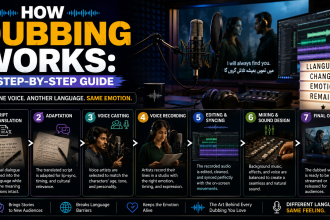
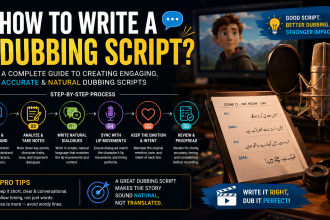
The process usually follows five stages: translating and adapting the script, casting voice actors, recording in a sound studio, syncing the new audio to the actors’ lip movements, and finally mixing everything into a polished track. Each stage needs skill — a literal translation rarely fits the rhythm of the original, so writers adapt lines so they sound natural and match timing.
Dubbing vs Subtitling
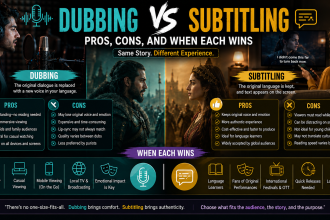
Subtitles keep the original voices and add translated text at the bottom of the screen. Dubbing removes the language barrier entirely so viewers can simply watch. Both have fans: subtitles preserve original performances, while dubbing is more comfortable for children, busy viewers, and anyone who finds reading-while-watching tiring.
Who Works on a Dub?
A dubbing project is a team effort: a translator/adapter rewrites the script, a dubbing director guides performances, voice actors deliver the lines, and a sound engineer records and mixes the audio. Together they recreate the feel of the original in a new language.
Why Is Urdu Dubbing So Popular?
Urdu dubbing exploded thanks to Turkish historical dramas and a huge appetite for kids’ cartoons, documentaries, and educational content. Dubbing makes these stories accessible to millions who prefer to listen rather than read subtitles — including young children and elders.
Frequently Asked Questions
What is the difference between dubbing and voice-over?
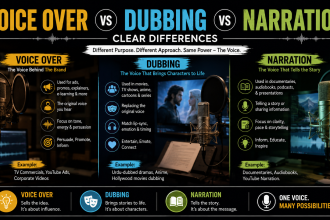
Dubbing replaces the original dialogue and tries to match the characters’ lip movements and emotion. Voice-over usually layers a single narrating voice on top of the original audio, which is still partly audible, and does not aim for lip-sync.
Is dubbing better than subtitles?
Neither is strictly better. Dubbing is easier for children and casual viewing; subtitles preserve the original actors’ performances. Many viewers switch depending on the content.
Is dubbed content legal to watch?
Yes — as long as you watch on official, licensed platforms that have the rights to distribute the dubbed version. Avoid piracy sites.
Related Reading
- Dubbing vs Subtitling: Pros, Cons, and When Each Wins
- Voice Over vs Dubbing vs Narration: Clear Differences
- How Dubbing Works: A Step-by-Step Guide
- How to Become an Urdu Voice-Over Artist: A Roadmap
Written by the UrduDub editorial team. We cover dubbing, voice-over, and where to watch localized content through official, legal sources. Spotted an error? Contact us — see our Editorial Policy.