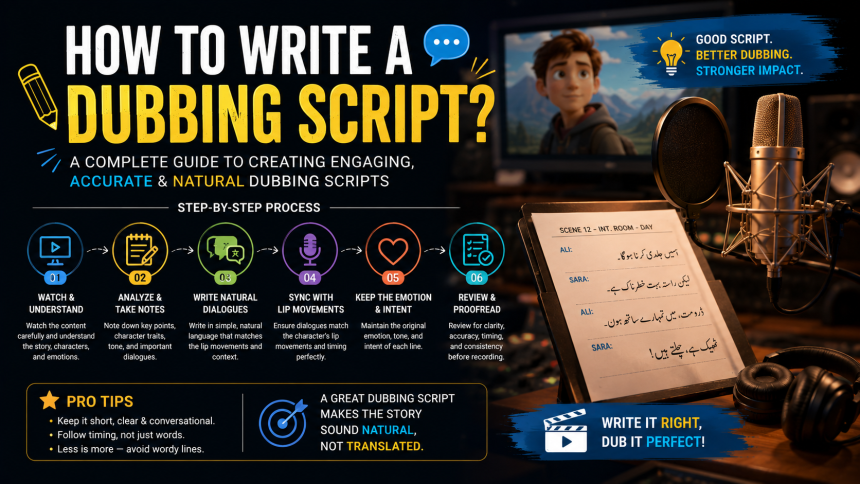
A great dub starts with a great script. Writing for dubbing is a specialised skill: you must convey the original meaning while matching timing, rhythm, and lip movement. Here is how to write a dubbing script that sounds natural and performs well.
- Translate for Meaning, Not Word-for-Word
- Match Timing and Length
- Mind the Lip Movements
- Write for the Ear
- Preserve Character Voice
- Format for the Studio
- Revise and Test
- Frequently Asked Questions
- How is a dubbing script different from a normal translation?
- How do I match lip movements when writing a dub?
- What should a dubbing script include?
- Related Reading
Translate for Meaning, Not Word-for-Word
A literal translation rarely fits. Capture the intent, tone, and emotion of each line, then express it naturally in the target language.
Match Timing and Length
Each translated line should take roughly the same time to speak as the original. Lines that are too long or too short break the sync and feel awkward.
Mind the Lip Movements
Where the camera shows a character’s mouth clearly, choose words whose sounds roughly match the visible lip shapes. This is what makes a dub believable.
Write for the Ear
Spoken language differs from written language. Use natural phrasing, contractions, and rhythm that an actor can perform comfortably. Read your lines aloud as you write.
Preserve Character Voice
Keep each character’s personality consistent — formal or casual, witty or serious. The dialogue should fit who they are.
Format for the Studio
- Label each line with the character’s name.
- Include timing cues or scene references.
- Note emotional direction where helpful.
- Keep the layout clean and easy to follow.
Revise and Test
Read the script against the footage, adjust lines that do not fit, and refine until the dialogue feels natural and synced. Great dubbing scripts are rewritten, not just written.
Frequently Asked Questions
How is a dubbing script different from a normal translation?
A dubbing script must match timing, rhythm, and lip movement while preserving meaning and character — not just translate words literally.
How do I match lip movements when writing a dub?
Where the mouth is clearly visible, choose words whose sounds roughly match the lip shapes, and keep line lengths close to the original timing.
What should a dubbing script include?
Character labels, timing or scene cues, emotional direction where useful, and clean, easy-to-perform formatting.
Related Reading
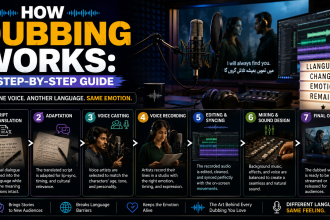
- How Dubbing Works: A Step-by-Step Guide
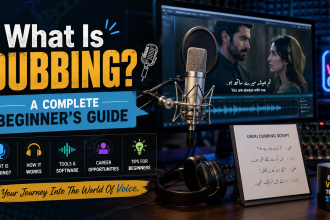
- What Is Dubbing? A Complete Beginner’s Guide
- How to Become an Urdu Voice-Over Artist: A Roadmap
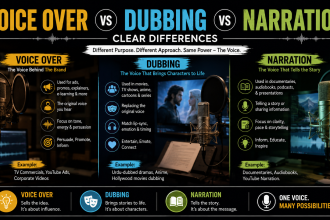
- Voice Over vs Dubbing vs Narration: Clear Differences
Written by the UrduDub editorial team. We cover dubbing, voice-over, and where to watch localized content through official, legal sources. Spotted an error? Contact us — see our Editorial Policy.