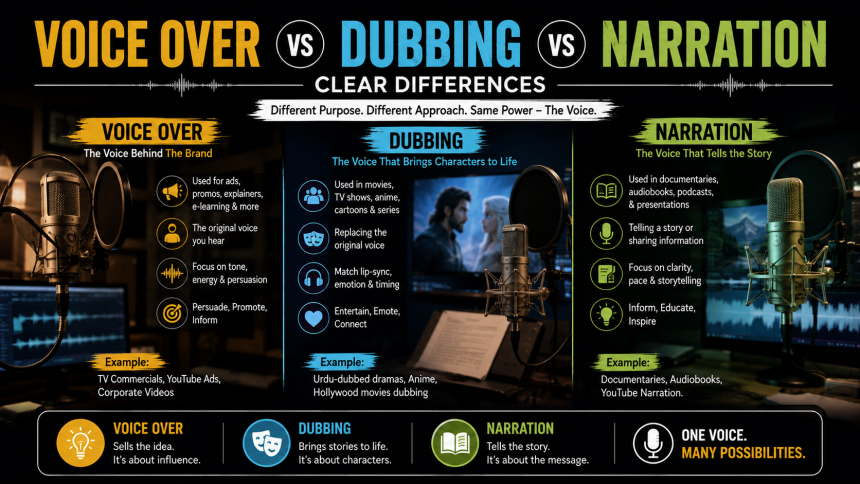
People often use “voice-over,” “dubbing,” and “narration” interchangeably, but they are different crafts with different goals. Understanding the difference helps you choose the right service — or career path.
Dubbing
Dubbing fully replaces the original dialogue in another language and tries to match the characters’ lip movements and emotion. The original voices are removed entirely. This is what you hear in Urdu-dubbed dramas and cartoons.
Voice-Over
Voice-over layers a new voice on top of existing audio or visuals, without trying to lip-sync. The original sound may still be partly audible underneath. Think documentaries, news packages, explainer videos, and advertisements.
Narration
Narration is a form of voice-over where a single voice tells a story or guides the viewer — common in documentaries, audiobooks, and e-learning. It is typically calm, clear, and steady.
Key Differences at a Glance
- Dubbing: replaces dialogue, needs lip-sync, multiple character voices.
- Voice-over: added on top, no lip-sync, often one voice.
- Narration: storytelling voice-over, usually one steady narrator.
Which Skill Should You Learn?
All three rely on clear delivery and vocal control, so improving your fundamentals helps with every type. Dubbing demands acting and timing; narration rewards warmth and consistency; voice-over sits in between.
Frequently Asked Questions
Is narration the same as voice-over?
Narration is a type of voice-over focused on storytelling or guiding the viewer, usually with one steady voice. Voice-over is the broader category.
Does voice-over need lip-sync?
No. Unlike dubbing, voice-over is layered over existing audio or visuals and does not try to match lip movements.
Which is hardest to learn?
Dubbing is often considered the most demanding because it combines acting, emotion, and precise lip-sync timing.
Related Reading
- What Is Dubbing? A Complete Beginner’s Guide
- How Dubbing Works: A Step-by-Step Guide
- Dubbing vs Subtitling: Pros, Cons, and When Each Wins
- How to Become an Urdu Voice-Over Artist: A Roadmap
Written by the UrduDub editorial team. We cover dubbing, voice-over, and where to watch localized content through official, legal sources. Spotted an error? Contact us — see our Editorial Policy.