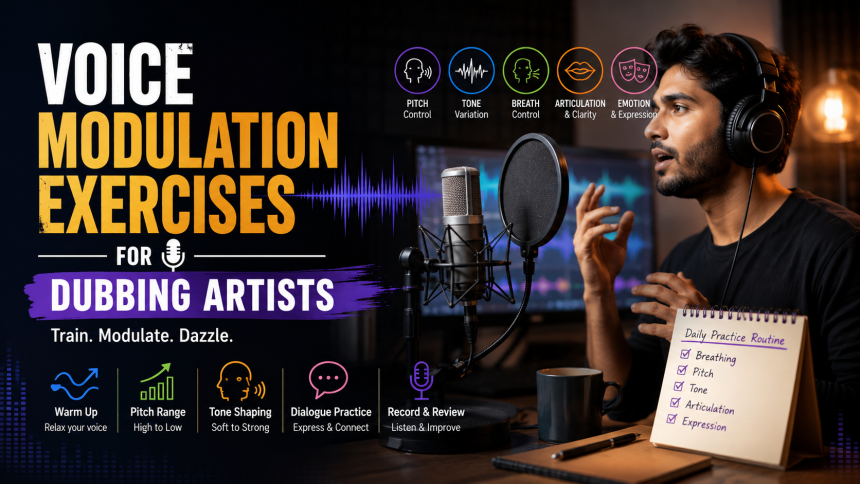
Voice modulation — varying your pitch, pace, volume, and tone — is what turns a flat read into a captivating performance. For dubbing artists, it is an essential skill. Here are exercises to develop a more expressive, controlled voice.
What Is Voice Modulation?
Modulation means consciously changing how you sound to convey meaning and emotion. The same sentence can sound joyful, angry, or sad depending purely on delivery.
Pitch Exercises
Practice reading a sentence in a low pitch, then a high pitch, then gliding smoothly between them. This builds range and control so you can match different characters.
Pace and Pause
Read the same passage quickly, then slowly. Then practice deliberate pauses for emphasis. Knowing when to slow down or pause is a powerful tool.
Volume Dynamics
Practice shifting from soft to loud within a sentence without losing clarity. Good modulation uses volume to highlight key words.
Emotion Switching
Take one neutral line and perform it as happy, sad, fearful, and excited. This trains you to summon emotion on demand — exactly what dubbing requires.
Breath Support
All modulation depends on steady breath. Practice diaphragmatic breathing so you can sustain phrases and control dynamics without strain.
Record and Compare
Record your exercises and listen back. Aim for variety that feels natural, never forced. Over time, expressive delivery becomes second nature.
Frequently Asked Questions
What is voice modulation?
It is the conscious variation of pitch, pace, volume, and tone to express meaning and emotion in your delivery.
How do I make my voice more expressive?
Practice pitch glides, pace changes, deliberate pauses, volume dynamics, and switching emotions on the same line, then review recordings.
Why does my reading sound flat?
Usually a lack of pitch and pace variation, plus weak breath support. Modulation exercises fix this over time.
Related Reading
- How to Improve Urdu Diction and Pronunciation
- How to Become an Urdu Voice-Over Artist: A Roadmap
- How to Build a Voice-Over Demo Reel
- Urdu Dubbing Jobs From Home: How to Get Started
Written by the UrduDub editorial team. We cover dubbing, voice-over, and where to watch localized content through official, legal sources. Spotted an error? Contact us — see our Editorial Policy.