Your demo reel is your audition, business card, and portfolio rolled into one. Clients often decide within seconds, so a tight, well-produced demo is essential. Here is how to build one that wins work.
What a Demo Reel Is
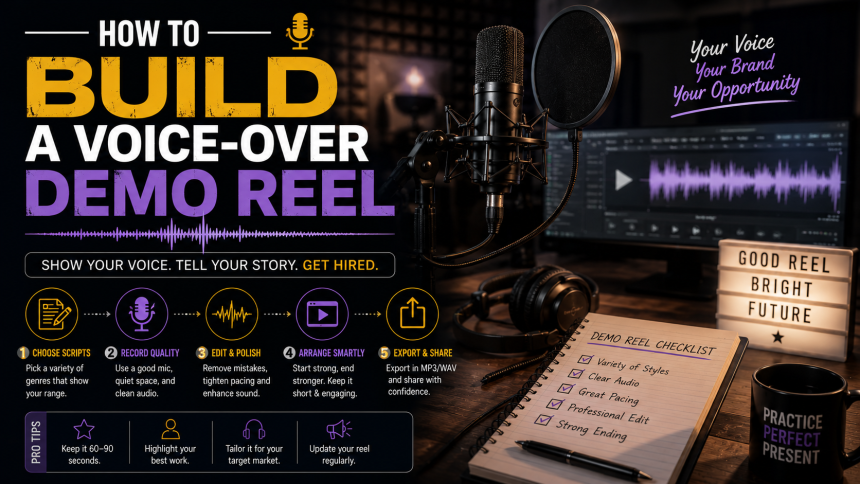
A demo reel is a short audio sample — usually 60 to 90 seconds — that showcases your range and quality. It is not a list of everything you can do; it is a curated highlight of your best.
Lead With Your Strongest Clip
Put your most impressive few seconds first. If a client stops listening after ten seconds, those ten seconds must shine.
Show Range — But Stay Focused
Include a few distinct styles, such as warm narration, an energetic commercial read, and a character voice. If you specialise (for example, e-learning or animation), tailor the demo to that niche.
Quality Over Quantity
Keep it short. Three to five clean, varied clips beat a long, repetitive reel. Record in a quiet, treated space and edit out noise, clicks, and long pauses.
Production Tips
- Use scripts that sound natural, not stiff.
- Add subtle, royalty-free music or sound design only if it elevates the clip.
- Match loudness across clips so nothing jumps in volume.
- Export a clean, high-quality audio file.
Where to Use It
Add your demo to freelance profiles, your website or social pages, and any direct pitches to studios and creators. Update it as your skills grow.
Frequently Asked Questions
How long should a voice-over demo reel be?
Usually 60 to 90 seconds. Short, varied, and high quality beats long and repetitive.
Do I need professional equipment to make a demo?
No, but the audio must be clean. A good USB mic, a quiet treated room, and careful editing are enough.
How many styles should I include?
Three to five distinct clips that show your range — or focus tightly on your chosen niche.
Related Reading
- How to Become an Urdu Voice-Over Artist: A Roadmap
- Urdu Dubbing Jobs From Home: How to Get Started
- Best Microphones for Voice-Over Beginners (2026)
- Best Free Audio Editing Software for Voice Over
Written by the UrduDub editorial team. We cover dubbing, voice-over, and where to watch localized content through official, legal sources. Spotted an error? Contact us — see our Editorial Policy.