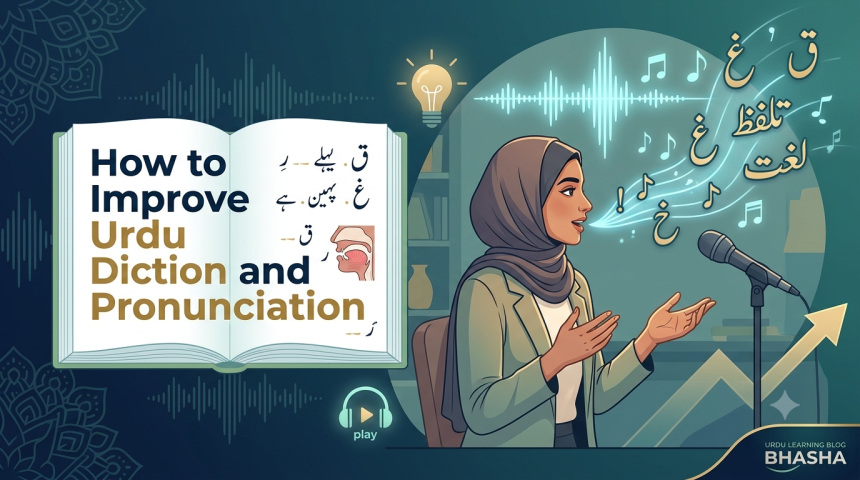
Clear diction is the foundation of great Urdu voice work. Even a beautiful voice loses impact if words are mumbled or mispronounced. The good news: diction is a skill you can train. Here are practical exercises that work.
- Why Diction Matters
- Daily Warm-Ups
- Practice With Tongue Twisters
- Read Aloud Every Day
- Record and Review
- Mind Your Pace and Breath
- Common Pitfalls to Avoid
- Frequently Asked Questions
- How can I improve my Urdu pronunciation quickly?
- Why does my voice sound unclear in recordings?
- Do warm-ups really help diction?
- Related Reading
Why Diction Matters
Crisp, accurate pronunciation makes you easier to understand, more professional, and more trustworthy to listeners. For dubbing and narration, it is non-negotiable.
Daily Warm-Ups
Spend a few minutes each day on lip, tongue, and jaw exercises. Humming, lip trills, and gentle stretching loosen your articulators and prepare your voice.
Practice With Tongue Twisters
Urdu tongue twisters sharpen your articulation. Start slow and clear, then gradually speed up while keeping every sound distinct.
Read Aloud Every Day
Read news scripts, poetry, and stories aloud. Focus on pronouncing each word fully, especially the precise sounds of Urdu letters that are easy to slur.
Record and Review
Record yourself, then listen critically. Note where words blur or where your pace runs away from you. This honest feedback loop is the fastest way to improve.
Mind Your Pace and Breath
Many clarity problems come from rushing or running out of breath. Slow down slightly, breathe from the diaphragm, and let each phrase land cleanly.
Common Pitfalls to Avoid
Watch for swallowed word-endings, inconsistent emphasis, and a flat, monotone delivery. Variety in tone keeps listeners engaged while clarity keeps them understanding.
Frequently Asked Questions
How can I improve my Urdu pronunciation quickly?
Daily reading aloud, tongue twisters, and recording yourself for review produce noticeable improvement within a few weeks.
Why does my voice sound unclear in recordings?
Common causes are rushing, poor breath support, swallowed word-endings, and an echoey room. Slow down, breathe well, and treat your space.
Do warm-ups really help diction?
Yes. A few minutes of lip, tongue, and jaw warm-ups before recording noticeably improves clarity and control.
Related Reading
- How to Become an Urdu Voice-Over Artist: A Roadmap
- Voice Modulation Exercises for Dubbing Artists
- Urdu Dubbing Jobs From Home: How to Get Started
- How to Build a Voice-Over Demo Reel
Written by the UrduDub editorial team. We cover dubbing, voice-over, and where to watch localized content through official, legal sources. Spotted an error? Contact us — see our Editorial Policy.