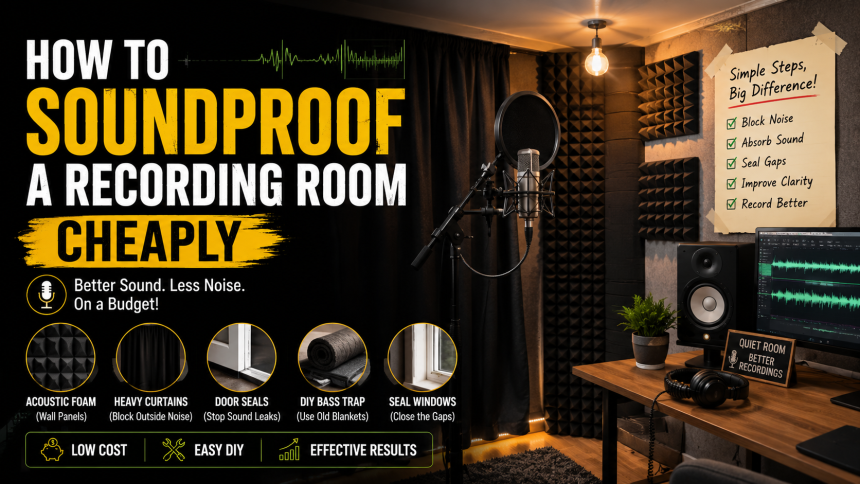
You do not need an expensive studio to record clean voice-over. With a few budget-friendly tricks, you can dramatically reduce echo and outside noise in any room. Here is how to do it cheaply and effectively.
- First, Understand the Goal
- Cheap Ways to Reduce Echo
- Reducing Outside Noise
- DIY Vocal Booth Ideas
- Microphone Technique Helps Too
- Frequently Asked Questions
- How can I soundproof a room cheaply for recording?
- What is the difference between soundproofing and acoustic treatment?
- Do I need foam panels?
- Related Reading
First, Understand the Goal
There are two different problems: soundproofing (stopping outside noise getting in) and acoustic treatment (reducing echo inside the room). For voice-over, treating echo usually matters most.
Cheap Ways to Reduce Echo
- Record in a small, soft-furnished room rather than a large empty one.
- Hang thick blankets or duvets on the walls around you.
- Record inside or next to a wardrobe full of clothes — fabric absorbs reflections.
- Add rugs, curtains, cushions, and a bookshelf to break up sound.
Reducing Outside Noise
- Record at quieter times of day.
- Seal gaps under doors with a draft stopper.
- Use heavy curtains over windows.
- Turn off fans, air-conditioners, and noisy appliances while recording.
DIY Vocal Booth Ideas
A simple “blanket fort” around your mic, or a portable reflection filter behind it, can deliver surprisingly professional results for almost no money.
Microphone Technique Helps Too
Recording closer to the mic (with a pop filter) and using a cardioid pattern naturally reduces how much room sound you capture.
Frequently Asked Questions
How can I soundproof a room cheaply for recording?
Use blankets, duvets, rugs, curtains, and a clothes-filled wardrobe to absorb echo, and record at quiet times to reduce outside noise.
What is the difference between soundproofing and acoustic treatment?
Soundproofing blocks outside noise; acoustic treatment reduces echo inside the room. For voice-over, treating echo usually matters most.
Do I need foam panels?
They help, but blankets, soft furnishings, and recording inside a wardrobe can work just as well on a tight budget.
Related Reading
- Best Microphones for Voice-Over Beginners (2026)
- Best USB Mics for a Home Dubbing Studio
- How to Become an Urdu Voice-Over Artist: A Roadmap
- Best Free Audio Editing Software for Voice Over
Written by the UrduDub editorial team. We cover dubbing, voice-over, and where to watch localized content through official, legal sources. Spotted an error? Contact us — see our Editorial Policy.