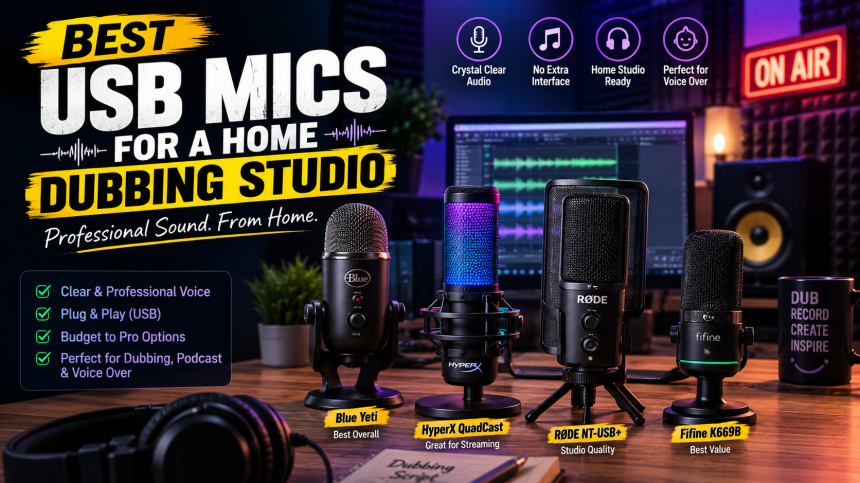
For most people building a home dubbing studio, a USB microphone is the perfect starting point: plug it in, open your software, and record. This guide explains what to look for and how to get the best results from an affordable USB mic.
Why USB Mics Are Great for Home Studios
USB microphones combine the mic and audio interface in one device, so there is no extra hardware to buy or configure. They are affordable, portable, and surprisingly capable for voice work.
What to Look For
Cardioid polar pattern
A cardioid pattern focuses on your voice and rejects background noise — essential in an untreated home room.
Low self-noise and clear tone
Look for a mic with a clean, natural sound and minimal hiss. Read reviews and listen to sample recordings before buying.
Useful extras
A headphone jack for zero-latency monitoring, a mute button, and a sturdy stand or mount add real convenience.
Getting the Best Sound From a USB Mic
- Record in a quiet, soft-furnished space to reduce echo.
- Use a pop filter and keep a consistent distance.
- Speak slightly off-axis to soften harsh sounds.
- Set input levels so your loudest words do not clip.
When to Upgrade
If you start taking on regular paid work and want higher quality, that is the time to consider an XLR mic with an audio interface. Until then, a good USB mic will serve you well.
Frequently Asked Questions
Are USB microphones good enough for professional dubbing?
For home and entry-level professional work, yes. Many creators deliver paid voice work with quality USB mics in a treated room.
What polar pattern is best for voice work?
Cardioid, because it captures your voice while rejecting side and rear noise.
How can I make my USB mic sound better?
Treat your room for echo, use a pop filter, keep a steady distance, and set your levels to avoid clipping.
Related Reading
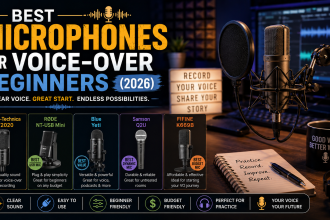
- Best Microphones for Voice-Over Beginners (2026)
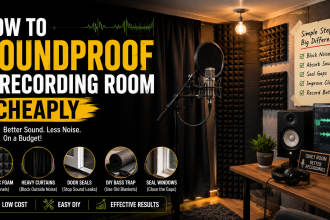
- How to Soundproof a Recording Room Cheaply
- Best Audio Interfaces for Voice Over
- Best Free Audio Editing Software for Voice Over
Written by the UrduDub editorial team. We cover dubbing, voice-over, and where to watch localized content through official, legal sources. Spotted an error? Contact us — see our Editorial Policy.